Relationship Fields Part 1 with Dr. Cari Skrdla
Jul 10, 2026What if your 'love language', your nervous system, and God's economy are all pointing to the same thing? This is part 1 of a special 2-part series With Dr. Cari Skrdla:
Relationship Fields: Are you Constituted for Love?
Something is already shaping — and Limiting — Your Capacity for Connection right now.
You didn't choose it consciously. You may not even know it's there. And it is quietly determining what love is possible between you and the people who matter most.
Dr. Cari Skrdla has spent years at the intersection of neuroscience, Scripture, and human relationships asking one question: why do people who genuinely want love keep recreating the same patterns that make love so hard?
The answer is not what most of us expect.
It isn't a character flaw. It isn't a lack of faith. It isn't even the other person. It's the field.
Every one of us lives within relational patterns we inherited long before we could name them. The way we learned to give and receive nurturing. The way authority and guidance feel in our bodies. Whether we know how to let someone truly companion us, or only know how to perform closeness. Whether we can be genuinely inspired by another person, or whether someone else's light feels threatening to our own.
These are the Four Relational Patterns.
They were shaped by your family of origin, your early experiences, and your nervous system, which has been faithfully holding these patterns in place ever since.
Here is the discovery that changes everything:
You are not a passive inhabitant of these fields. You are generating them. In every relationship you are in, you are co-creating the field both of you live in.
The question Dr. Cari is asking, and answering over two powerful sessions in the Weekly Forum, is this: what field are you building? And what becomes possible when you begin building it in God's economy instead of from your wounding?
Session 1: Seeing What Has Always Been There
You will be introduced to the Four Relational Patterns and, for many of you, you will see yourself and your most important relationships with new eyes for the first time.
You will understand how your Love Language lives inside these fields, and why knowing your Love Language alone has never been quite enough.
You will begin to understand how your nervous system has been the silent architect of relational patterns that no amount of good intention could shift on its own.
This session is about seeing clearly. And clarity, in God's design, is always the beginning of freedom.
Session 2: Building the New Field
Seeing is not enough.
Transformation requires something more than awareness. In this session, Dr. Cari moves you from naming the pattern to rebuilding from the inside out, in active partnership with God.
You will leave with a living framework for co-generating relationships that reflect His will: not built on lack, fear, or inherited wounding, but on divine design, covenant love, and the kind of healing your nervous system has been waiting for.
This is not a lecture. It is an encounter.
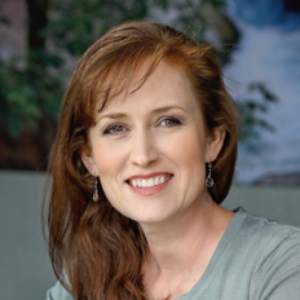
Dr. Cari Skrdla, PhD, is School of Life Mastery faculty and the creator of Soulmate Success Mastery and Operating in God’s Economy. She bridges Christian values, neuroscience, ancient wisdom traditions, Scripture, and depth psychology to help people step out of the relational fields that have kept them small and into the love Christ inspires us to give and receive. She is not coming to inform you. She is coming to help liberate you.
Register free to get the class handouts and the meeting link for part 2 here:
https://www.schooloflifemastery.com/weekly-forum-special-event
Highlights from the Part 1 Live Chat
00:12:35 — Emmy Amick
I hope to learn more about relationship fields, recognize where I am now, and understand how to move into a dynamic that serves me—one that helps me become a better co-creator with my Heavenly Father.
00:13:46 — Deanna Toronto
I want to understand myself better, especially what prompts my reactions in different situations. What are my unconscious patterns?
00:21:21 — Livia Pewtress
Is there a relationship field for acquaintances, community members, or groups—people who are not close enough to fit into a sibling or friendship dynamic?
00:22:10 — Tyrie Buzinde
Could a spouse fall into an “admired/admirer” field?
00:25:24 — Livia Pewtress
I think a spouse could fit into that field, although spouses may also fall into other categories. The purpose is to explore the actual dynamic operating within each relationship.
00:45:07 — Dawn Norton
We were both looking through a lens. Until we actually talked about it, neither of us could see what was happening.
00:54:20 — Cindy
If we did not experience good or stable relationships as children, could that help explain why we seek serotonin or emotional rewards by taking care of other people?
01:01:41 — Adrian Booher
How can I begin changing the social contract I learned as a child?
01:05:05 — Jeanine Rhodes
Can we operate in more than one role or relationship field at the same time?
01:15:18 — Leslie Householder
One thing that took me a while to understand is that when Cari refers to a “Mother/Child” field—or any other field—she is not describing a fixed, universal experience.
She is referring to the particular Mother/Child dynamic she experienced. When she recognizes that familiar pattern in another relationship, she may unconsciously place that person into the same field.
The purpose of this work is to recognize those familiar dynamics so we can consciously create relationship fields that serve us better, rather than repeatedly defaulting to the same unconscious interactions.
01:27:32 — Homework from Leslie
Find 50 objects around your home and identify the relationship field you have placed each object in.
01:39:34 — Mary
Will we have access to the slides so we can complete the homework?
Leslie’s response:
The slides and examples can be reviewed within the replay. Additional homework materials may also be provided separately.
01:40:19 — Tyrie Buzinde
Will you also discuss wounded feminine and wounded masculine energy, and how those patterns connect with relationship fields?
01:41:52 — Jennifer Davis
I am recognizing so much of what you are describing in a way I never have before. Thank you!

Brought to you by...